

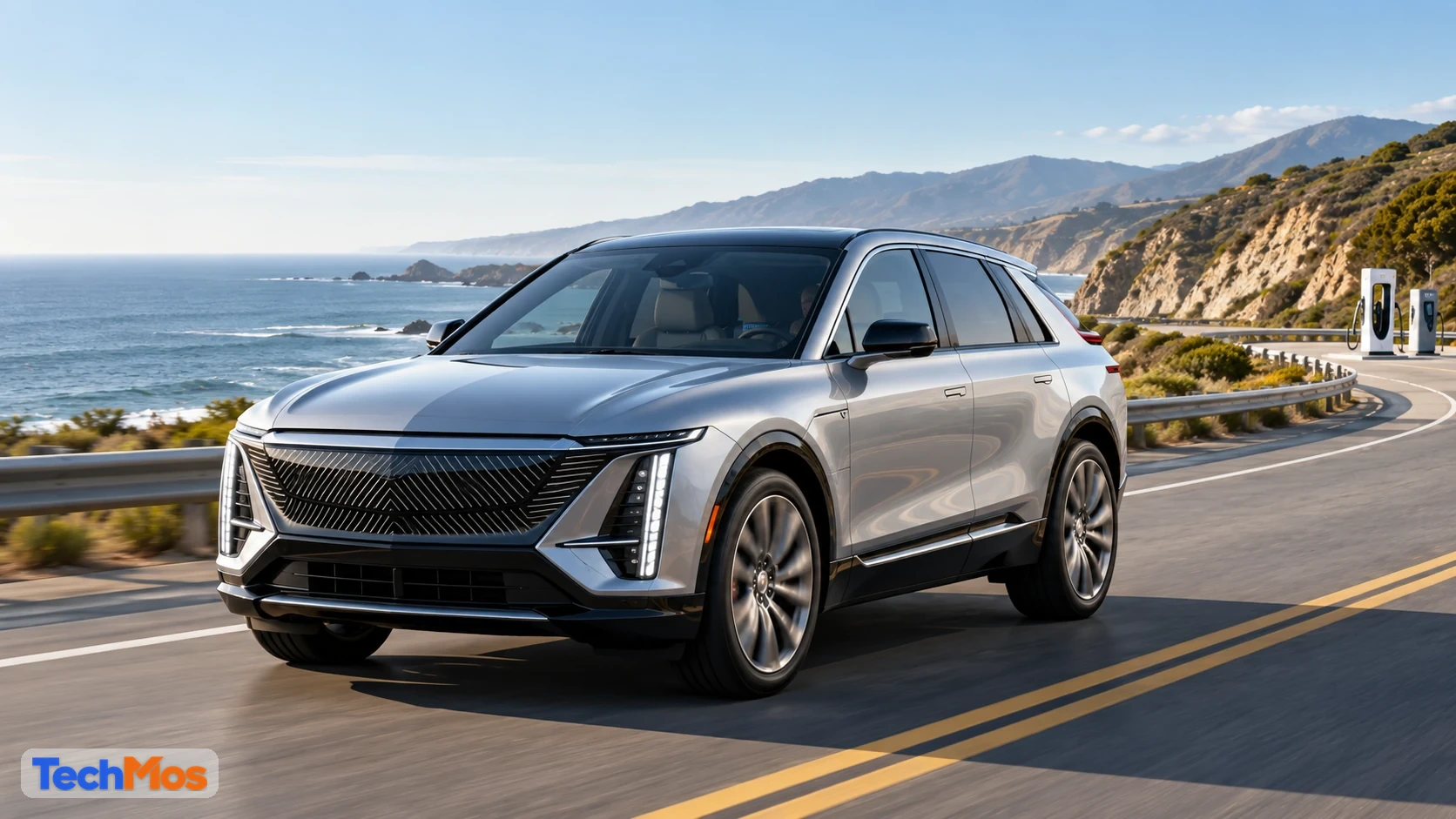
Cadillac does not publish separate EPA range ratings for the LYRIQ’s Tour, Sport, Snow/Ice and My Mode settings. Those modes can affect real-world battery consumption because they change accelerator response and other vehicle behavior, but switching modes does not change the battery’s physical capacity, and there is no verified fixed percentage showing how much range each mode gains or loses.
For the 2027 LYRIQ, Cadillac lists a 102-kWh battery capacity. Its EPA-estimated range figures are tied to drivetrain and equipment configurations rather than the selected driving mode.
Do LYRIQ driving modes have different official ranges?
No separate Tour, Sport, Snow/Ice or My Mode EPA range figures are published by Cadillac.
That distinction matters because three different concepts are often mixed together:
- Battery capacity is the amount of energy the battery is designed to hold. Selecting Sport instead of Tour does not make that battery larger or smaller.
- EPA-estimated range is a standardized certification figure for a vehicle configuration.
- Real-world energy consumption changes from trip to trip depending on acceleration, speed, temperature, climate-control use, terrain and other conditions.
Cadillac currently lists these EPA-estimated ranges for the 2027 LYRIQ:
| Configuration | EPA-estimated range |
|---|---|
| Single-motor RWD | 326 miles |
| Dual-motor AWD, listed with standard 11.5-kW charging configuration | 319 miles |
| Dual-motor AWD, listed with available 19.2-kW charging configuration | 303 miles |
| LYRIQ-V dual-motor AWD | 285 miles |
These are configuration-level figures. Cadillac does not identify them as separate Tour- or Sport-mode ranges, and its specifications do not establish that the onboard charger alone causes the difference between the two AWD figures.
What Tour, Sport, Snow/Ice and My Mode actually change
Cadillac’s 2025 LYRIQ Owner’s Manual documents four standard modes. Cadillac’s 2026 LYRIQ product information describes the same group, although exact features can vary with model year and equipment.
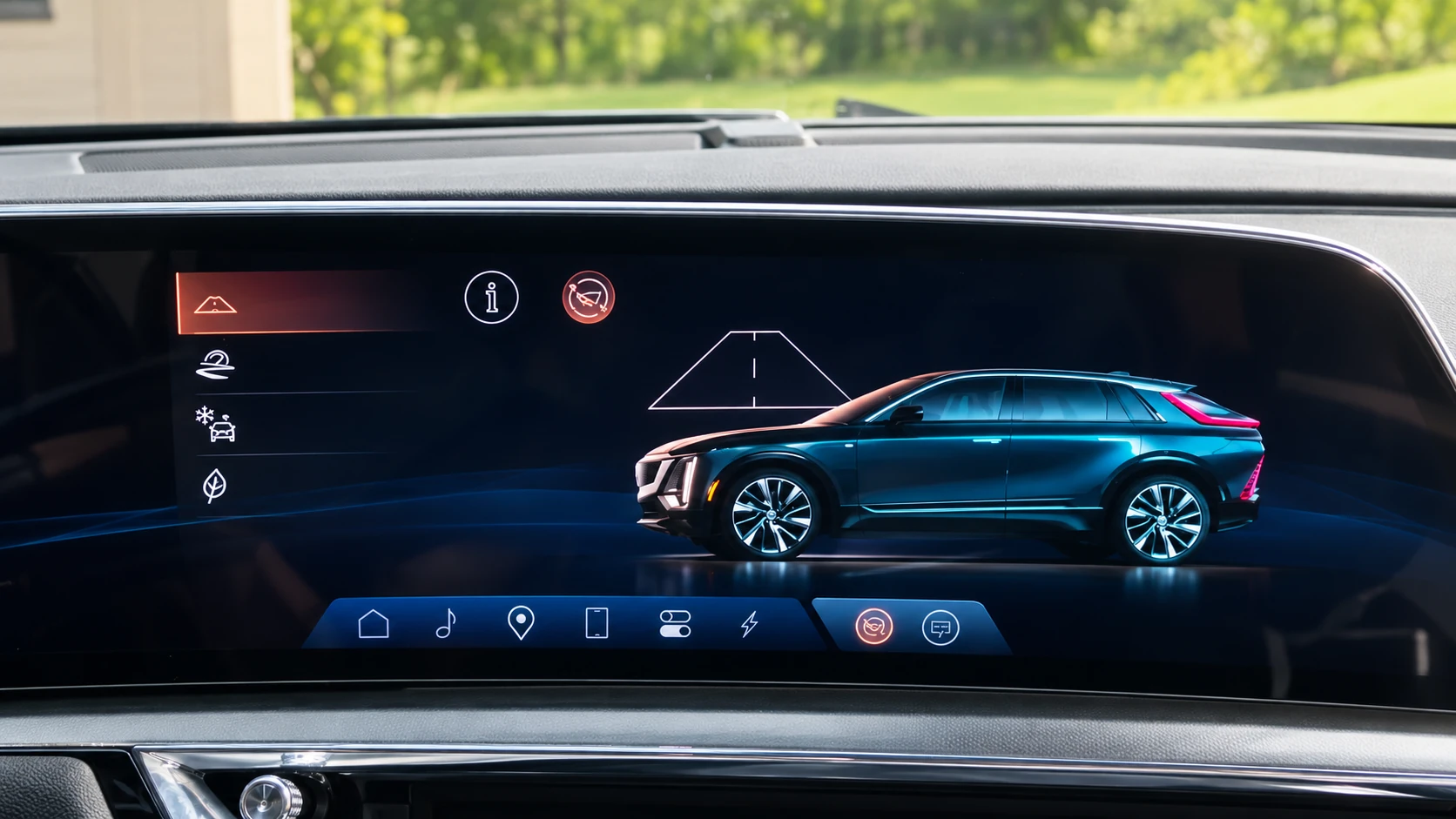
| Mode | Main purpose | What Cadillac documents | What can safely be said about range |
|---|---|---|---|
| Tour | Normal everyday driving | Balanced comfort and handling; smooth everyday calibration | Cadillac’s broader Driver Mode guidance describes Tour/Normal as its most economical everyday setting, but there is no separate LYRIQ Tour range rating |
| Sport | More responsive driving | More immediate torque/accelerator response, plus changes to steering and other dynamic systems depending on equipment | Can increase consumption if the sharper response leads to harder acceleration; no fixed penalty is published |
| Snow/Ice | Slippery-road traction | Softer pedal response and changes to traction-related systems | Not an efficiency mode; winter range losses cannot be attributed to Snow/Ice alone |
| My Mode | Personalization | Can alter acceleration feel, brake feel, steering, suspension and motor sound where equipped | Consumption depends on configuration and driving behavior; there is no universal My Mode range |
One detail worth keeping separate: Sport trim is not the same thing as Sport driving mode. Likewise, choosing RWD or AWD is a hardware decision, not a drive-mode selection.
Does Sport mode use more battery than Tour?
It can, but not by a fixed amount.
Cadillac describes Sport as giving the LYRIQ more immediate torque response. That makes stronger acceleration easier to access. The U.S. Department of Energy’s EV guidance says rapid acceleration reduces electric-vehicle range compared with more gradual acceleration.
The important point is causation. Sport mode does not appear to impose a known, constant battery penalty simply because the word “Sport” is displayed on the screen. Its sharper calibration can encourage or enable driving that demands more power.
A driver who repeatedly accelerates hard in Sport will likely consume more energy than one driving smoothly in Tour. A driver who selects Sport but maintains steady speed and gentle accelerator inputs may see a much smaller difference.
That is why claims such as “Sport always costs 10%,” “Sport reduces range by 16–19%,” or “Sport loses 50 miles” should not be treated as established LYRIQ specifications. No controlled, repeatable mode-to-mode test supporting a universal figure was identified in the documented material.
Is Tour mode the LYRIQ’s Eco mode?
Not exactly.
Cadillac does not label a standard LYRIQ mode “Eco.” Its general Driver Mode Control guidance describes Tour or Normal as the most economical setting for everyday driving, while LYRIQ-specific documentation describes Tour as the normal, smooth-driving choice.
That makes Tour the sensible starting point when efficiency is the goal, but it does not guarantee maximum range. A LYRIQ driven aggressively in Tour can still use more energy than one driven gently in Sport.
Speed and accelerator use often matter more than the mode name itself.
Why Snow/Ice range is easy to misread
Snow/Ice is designed for traction, not for extending range.
Cadillac says the mode softens accelerator response and adjusts vehicle systems to help manage slippery conditions. If a driver sees lower estimated range while Snow/Ice is active, the mode may not be the main reason.
Cold weather itself can increase an EV’s energy use. The LYRIQ owner’s manual notes that cold temperatures and cabin heating reduce the energy available for driving. The EPA’s EV range-testing guidance also accounts for factors such as cold temperature, climate-control use, high speed and aggressive driving when translating laboratory tests toward real-world expectations.
Snow-covered roads, winter tires, heating demand and low temperatures can all be operating at the same time. Assigning a specific winter range loss to Snow/Ice mode alone would therefore be misleading.
My Mode does not have one predictable efficiency result
My Mode is customizable, so its battery usage depends on what the driver configures and how the vehicle is driven.
Cadillac’s LYRIQ documentation lists settings such as acceleration feel, brake feel, steering, suspension and motor sound where equipped. It does not establish a single My Mode efficiency setting or a separate EPA range.
It is also important not to interpret “brake feel” as proof that My Mode lets the driver directly select regenerative-braking strength. Cadillac documents regenerative-driving features separately.
One-Pedal Driving and Regen On Demand are separate from drive modes
The LYRIQ’s regenerative-braking features are relevant to efficiency, but they should not be confused with Tour, Sport, Snow/Ice or My Mode.
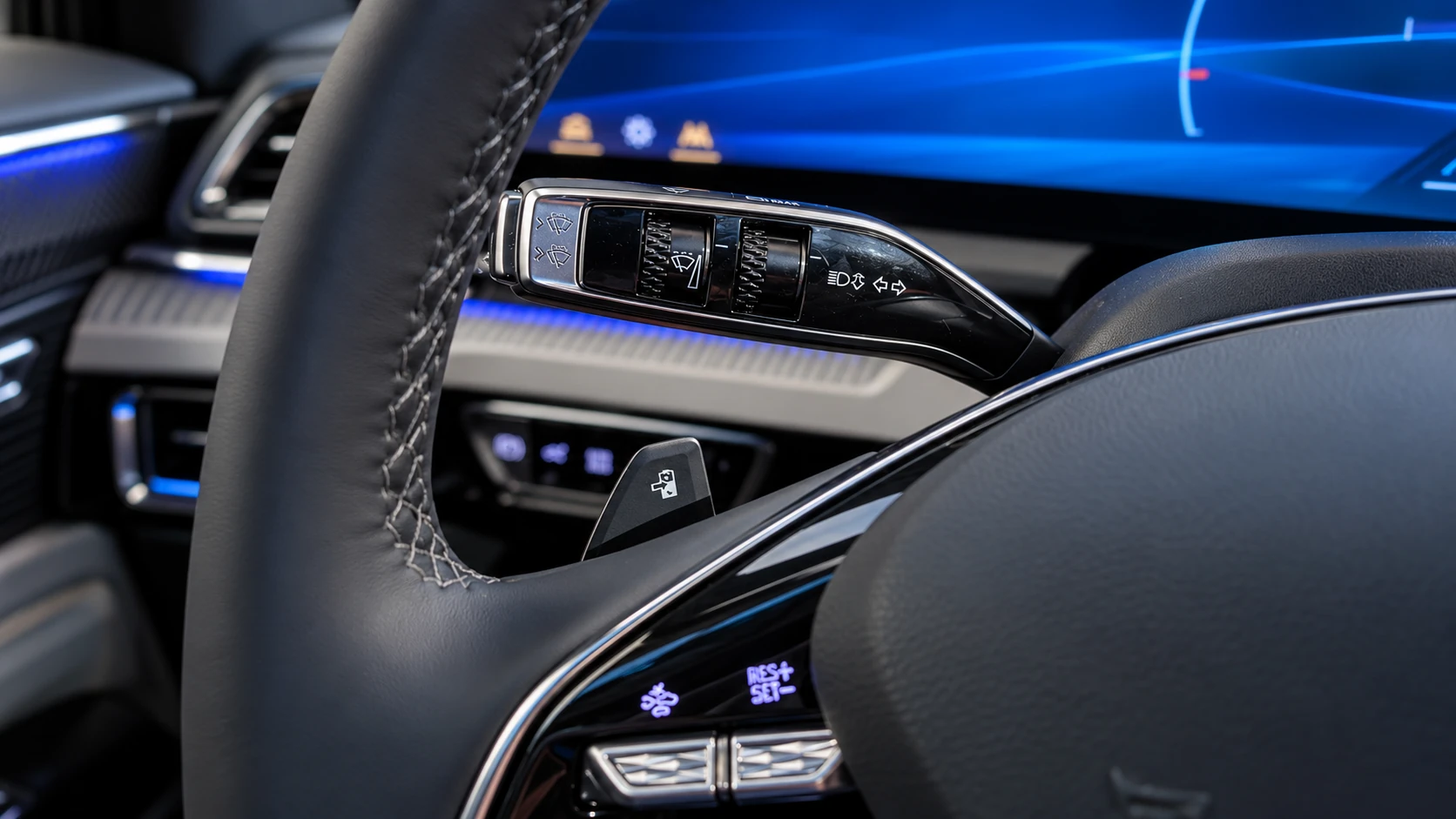
Regenerative braking uses the electric motors to slow the vehicle while converting some of its motion back into electrical energy stored in the high-voltage battery. Cadillac describes One-Pedal Driving and Regen On Demand as separate EV-driving features.
One-Pedal Driving can slow the LYRIQ when the accelerator is released, while Regen On Demand lets the driver request regenerative deceleration through its control. Regeneration can be limited in some circumstances, including when the battery is cold or near full.
These systems can improve efficiency by recovering some energy that would otherwise be lost during braking. They do not create extra energy, and Cadillac does not promise that using them will add a fixed number of miles.
Does the EPA test electric-car driving modes?
The absence of separate consumer-facing ranges for every mode does not mean the EPA ignores driving modes.
The EPA’s battery-electric vehicle MPGe and range-testing guidance specifically addresses selectable vehicle modes. The agency distinguishes situations in which a vehicle has a single default mode from those where relevant settings remain selected, or “latch,” between drive cycles.
Depending on how the vehicle is configured, the policy can require different test treatment, including consideration of best- and worst-case latching modes. The EPA guidance specifically recognizes features such as Sport buttons, selectable regeneration levels, pedal-to-motor torque maps and suspension settings as potentially relevant to drive-mode testing.
What is not publicly established here is exactly how Cadillac’s current LYRIQ certification result maps to Tour, Sport or My Mode. The 2025 LYRIQ manual says Tour, Sport and My Mode can persist across restarts, but that alone does not prove which setting or combination produced the consumer-facing EPA number.
So the claim that “the LYRIQ’s EPA figure is simply its Tour-mode range” goes beyond what Cadillac’s published specifications establish.
What affects LYRIQ range more predictably than the mode label?
Cadillac’s own manual and federal EV guidance point to several factors with clear effects on consumption.
Acceleration: Repeated hard acceleration demands more power. This is one reason Sport can lead to higher energy use when its extra responsiveness is used aggressively.
Highway speed: The Department of Energy notes that EVs generally require more energy at highway speeds because aerodynamic drag increases. A mode change cannot cancel that physics.
Temperature and climate control: Cold batteries and cabin heating can reduce available driving range, while heavy air-conditioning use also consumes energy.
Terrain and load: Climbing grades and carrying more weight require additional energy.
Regenerative opportunities: Stop-and-go driving creates more chances to recover some energy during deceleration than steady highway cruising.
For an owner trying to maximize range, those variables are more useful to watch than an unsupported mode-specific percentage.
What is different about the LYRIQ-V?
The high-performance LYRIQ-V should be treated separately from the standard LYRIQ.
Cadillac gives the V model additional performance functions, including Velocity Max. Unlike ordinary Sport mode, Cadillac explicitly says in its Velocity Max guidance that the feature draws more energy from the battery than regular driving and may deplete it faster. Cadillac advises against using it when range is a concern.
That warning applies to the performance feature. It should not be used to claim that standard LYRIQ Sport mode behaves the same way.
So which LYRIQ mode is best for range?
For ordinary driving, Tour is the most straightforward choice when efficiency is the priority because Cadillac positions Tour/Normal as its economical everyday setting. But it is more accurate to think of the driving mode as one influence on consumption rather than a switch that assigns the vehicle a new range.
Sport can use more battery if its sharper response leads to stronger acceleration. Snow/Ice should be chosen for slippery conditions rather than for efficiency. My Mode depends on the settings selected.
The bigger takeaway is that the LYRIQ does not have four different battery capacities or four published EPA ranges hiding behind its drive-mode menu. The battery stays the same size; what changes is how the vehicle responds and, potentially, how quickly the driver uses the energy stored in it.